
Peptides used to be a quiet corner of pharmaceutical chemistry. Not anymore. A single therapeutic class — GLP-1 receptor agonists for obesity and diabetes — has pulled an entire value chain, from Fmoc-protected amino acids to finished tinted moisturisers, into a structural growth phase. For B2B buyers of peptide raw materials, ingredients and contract manufacturing, the question is no longer whether the market is expanding, but how to secure supply, navigate diverging regulations and ride the technology curve without getting caught in the next capacity correction. Here is what the latest data and reporting tell us.
1. The market is rewriting its own forecasts
Every major analyst revision this cycle points the same way: up. Grand View Research values the global peptide therapeutics market at USD 140.9 billion in 2025, projecting USD 294.6 billion by 2033 at an 8.7% CAGR, with North America holding a 61.9% revenue share in 2025. Other houses frame the same boom with different scopes — The Business Research Company sees USD 49.2 billion in 2025 rising to USD 83.6 billion by 2030 (11.2% CAGR), while Intel Market Research puts 2025 at USD 42.0 billion heading to USD 101.0 billion by 2034. Whatever the denominator, the direction is unambiguous: metabolic disease (diabetes and obesity) drives roughly two-thirds of therapeutic demand, and GLP-1 agents alone account for the lion's share of that growth.
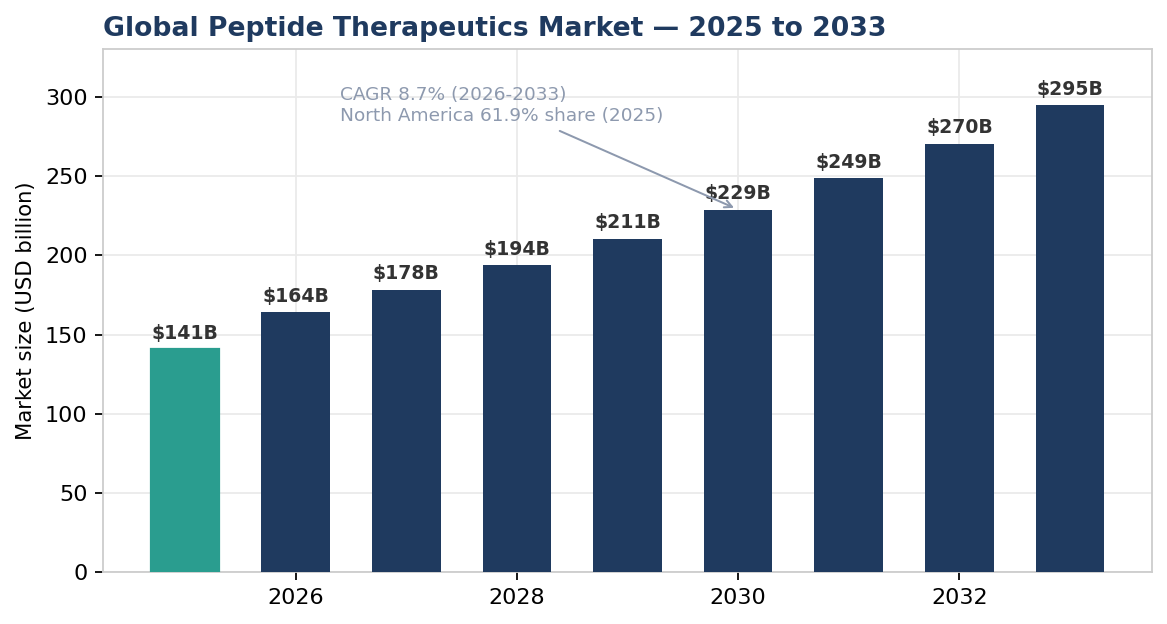
Figure 1 — Global peptide therapeutics market size, 2025–2033 (Grand View Research; CAGR 8.7%).
Grand View Research — Peptide Therapeutics Market | Research and Markets — Peptide Therapeutics Market Report 2026 | Intel Market Research — Peptide Therapeutics Market Dynamics
2. The raw-material bench is the real bottleneck
The most under-appreciated story for B2B buyers is how far upstream the squeeze runs. According to Market Intelo, peptide synthesis for GLP-1 alone consumed over 12% of global Fmoc-protected amino-acid demand in 2025 — a share forecast to exceed 20% by 2028 — alongside heavy pull on coupling reagents (HATU, HBTU), specialty solvents (NMP, DMF) and high-purity piperidine for Fmoc deprotection. The GLP-1 specialty-chemical sub-segment is growing at an estimated 14–16% CAGR through 2030, making it the single largest near-term demand driver for API synthesis chemicals worldwide.
On the manufacturing side, a ChemOutsourcing industry panel captured the mood precisely: obesity drives roughly 70% of GLP-1 revenue (diabetes the other 30%), and about half of all current CDMO capacity expansion ties back to GLP-1-type compounds. Contract Pharma's May 2025 outlook notes peptide-API capacity remains "constrained and at a premium" as more peptides enter the clinic, with new entrants chasing intermediates and fragments and reshaping the value chain. The China CXO rebound is equally striking — CPHI reports Wuxi康德's TIDES (oligo + peptide) business up 121% in the first nine months of 2025, with Asymchem's peptide-related revenue up over 150%.

Figure 2 — Efficiency gains from next-generation synthesis (CordenPharma tag-assisted process; see §3).
Market Intelo — Pharmaceutical Specialty Chemicals (API & Excipients) | ChemOutsourcing — GLP-1 Peptide Gold Rush | Contract Pharma — May 2025 CDMO Outlook | CPHI China — CXO Rebound
3. The technology frontier is moving faster than the capacity
Volume alone will not win this cycle; efficiency and differentiation will. Three technical threads are converging. First, solid-phase peptide synthesis (SPPS) is being pushed past its traditional limits — Intel Market Research notes chain lengths now exceed 60 amino acids, with liquid-phase fragment condensation efficiency above 92%, while long-acting formats (fatty-acid modification, PEGylation) have pushed median half-life from ~12 hours to ~96 hours. Second, greener, more intensively controlled processes are becoming a selection criterion, not a compliance afterthought: CordenPharma's tag-assisted synthesis cuts raw-material use 40–50% and solvent consumption by over 90% while improving purity and yield. Third, the modality map is widening — cyclic peptides, non-natural amino acids, peptide-drug conjugates (PDCs) and oral / longer-interval delivery formats are the new battlegrounds, with AI-assisted peptide design shortening discovery cycles.
Intel Market Research — Peptide Therapeutics Market Dynamics | ChemOutsourcing — Sustainable Manufacturing Panel (CordenPharma)
4. A three-continent regulatory reset
Regulators have caught up with the science, and the result is a stricter, more peptide-specific rulebook across the three major markets. The headline change is the EMA's Guideline on the Development and Manufacture of Synthetic Peptides, adopted in December 2025 and effective 1 June 2026 — the first comprehensive CMC guideline dedicated to synthetic peptides, translating ICH and EU principles into concrete expectations for SPPS, fragment condensation, impurity characterisation and comparability. The U.S. FDA issued its draft "Clinical Pharmacology Considerations for Peptide Drug Products" back in December 2023, signalling a move from "shoehorn into small-molecule rules" to purpose-built standards. China's CDE has been equally active: a peptide clinical-pharmacology guideline (Jan 2025), a recombinant GLP-1 RA pharmaceutics guideline (Sept 2025), and a filing-path Q&A for fully chemically synthesised peptide formulations (Mar 2026) that clears the route for semaglutide-class generics. The EMA guideline also addresses synthetic peptide development using a biological peptide as a European reference medicinal product; the appropriate regulatory route still needs a product-specific assessment.
For buyers, the practical consequence is to request a material-specific regulatory and analytical package, then assess each destination market separately.
Regulatory milestone timeline (2023–2026)
OutsourcedPharma — EMA Synthetic Peptide CMC Guideline | PeptideStaff — Global Regulatory Harmonization 2026 | Nanjing Peptide — China CDE Milestones (2025–2026)
5. The consumer pull you cannot ignore
Peptides are no longer confined to the clinic. The consumer side is a genuine demand engine that feeds back into B2B ingredient sourcing. Dataintelo sizes the global peptide cosmetics market at USD 27.2 billion in 2025, climbing to USD 52.59 billion by 2034 (7.6% CAGR), with Asia-Pacific already 35% of 2025 value and the fastest-growing region. German Health Review puts the cosmetic peptide manufacturing segment at USD 257.4 million in 2025 rising to USD 434.1 million by 2035 (5.4% CAGR), led by signal peptides and copper-peptide serums. By ingredient type, Market Intelo reports signal peptides dominate with a 32.5% share (~USD 390 million in 2025), followed by carrier peptides (24.8%), enzyme-inhibitor peptides (20.2%) and neurotransmitter-inhibiting peptides (15.3% — the "cosmetic Botox" Argireline class, growing fastest at 8.3% CAGR). The through-line for suppliers: clinically validated, vegan/bioengineered and AI-designed peptides, plus microbiome-friendly and personalised formats, are where brands are differentiating.

Figure 3 — Global peptide cosmetics market size, 2025–2034 (Dataintelo; CAGR 7.6%).
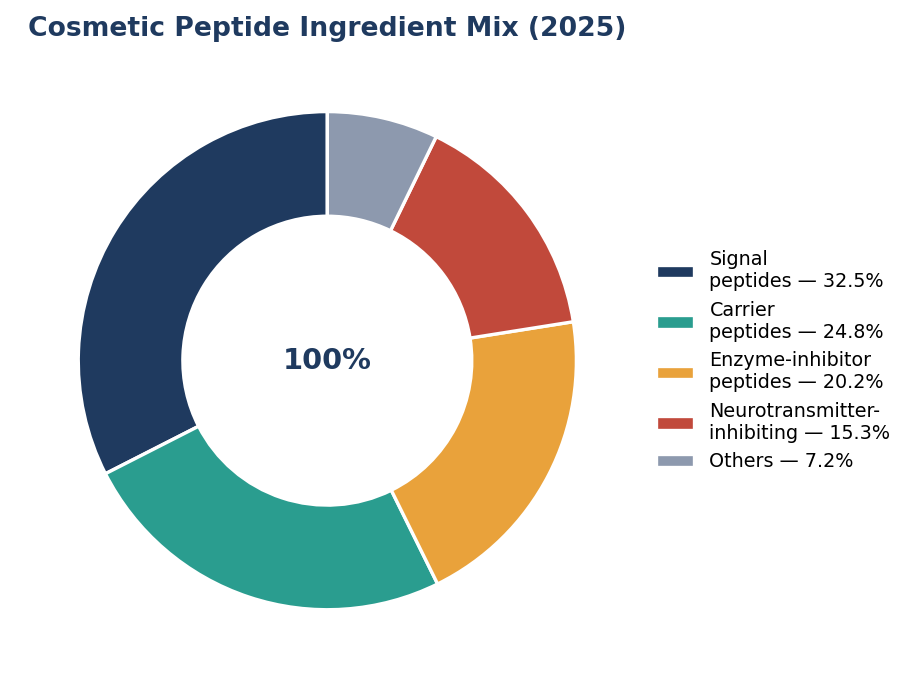
Figure 4 — Cosmetic peptide ingredient mix by type, 2025 (Market Intelo).
Dataintelo — Peptide Cosmetics Market 2025–2034 | Market Intelo — Peptide Cosmetic Ingredient Market | German Health Review — Cosmetic Peptide Manufacturing Outlook
What this means for your sourcing strategy
For procurement leads, formulators and CDMO selection teams, five moves stand out:
Secure the bench early. Plan building-block supply years ahead. Fmoc amino acids and coupling reagents are now on a GLP-1-driven allocation curve; lock multi-year contracts before capacity tightens further.
Buy reliability, not just price. Treat purity, GMP certification and impurity profiling as table stakes; the differentiator is quote-to-qualify-to-deliver speed and supply resilience.
Weight sustainability in vendor scoring. Favour partners with tag-assisted / continuous-flow / greener processes — they cut solvent and raw-material cost and de-risk your own ESG and compliance story.
Build global-ready regulatory files. Align dossiers to ICH Q6B/Q11 and the new EMA synthetic-peptide CMC rule now, and verify the applicable country requirements before relying on a shared dossier.
Watch the consumer crossover. The cosmetic-peptide pull (signal/copper/Argireline) is compounding pharma demand for the same chemistries — expect cross-market competition for capacity.
Source note: Figures are drawn from the publicly available market-research and industry-trade publications cited inline and listed below; market-size estimates vary by scope and methodology. Verify against primary company filings and regulatory texts before commercial decisions. This article is for industry information only and is not investment, legal or regulatory advice.
References & Sources
[1] Grand View Research. Peptide Therapeutics Market (2026–2033). https://www.grandviewresearch.com/industry-analysis/peptide-therapeutics-market
[2] Research and Markets. Peptide Therapeutics Market Report 2026. https://www.researchandmarkets.com/reports/5767340/peptide-therapeutics-market-report
[3] Intel Market Research. Peptide Therapeutics Market Dynamics. https://www.intelmarketresearch.com/medical-devices/22333/peptide-therapeutics-market
[4] Market Intelo. Pharmaceutical Specialty Chemicals (API & Advanced Excipients). https://marketintelo.com/report/pharmaceutical-specialty-chemicals-api-advanced-excipients-market
[5] ChemOutsourcing. GLP-1 Peptide Gold Rush: What's Driving 80% of CDMO Growth. https://chemoutsourcing.com/glp-1-peptide/
[6] Contract Pharma. May 2025 — CDMO Market Outlook. https://contractpharma.texterity.com/contractpharma/may_2025/MobilePagedReplica.action?folio=28
[7] CPHI China. CXO Rebound / TIDES Growth. https://www.cphi.cn/news/show-360881.html
[8] OutsourcedPharma. EMA's New Guideline for Synthetic Peptides (CMC Playbook). https://www.outsourcedpharma.com/doc/ema-s-new-guideline-for-synthetic-peptides-a-more-explicit-cmc-playbook-for-a-growing-therapeutic-class-0001
[10] Nanjing Peptide (南京肽业). China CDE Peptide Regulatory Milestones 2025–2026. http://www.njpeptide.com/article/7841.html
[11] Dataintelo. Peptide Cosmetics Market Size 2025–2034. https://dataintelo.com/report/peptides-skin-care-products-market
[12] Market Intelo. Peptide Cosmetic Ingredient Market 2034. https://marketintelo.com/report/peptide-cosmetic-ingredient-market/amp
[13] German Health Review. Global & European Cosmetic Peptide Manufacturing Outlook 2025–2035. https://www.germanhealthreview.com/article/867900642-global-and-european-cosmetic-peptide-manufacturing-market-outlook-2025-2035